
From the farm to the fleet: How U.S. Soy is finding new demand in city garages
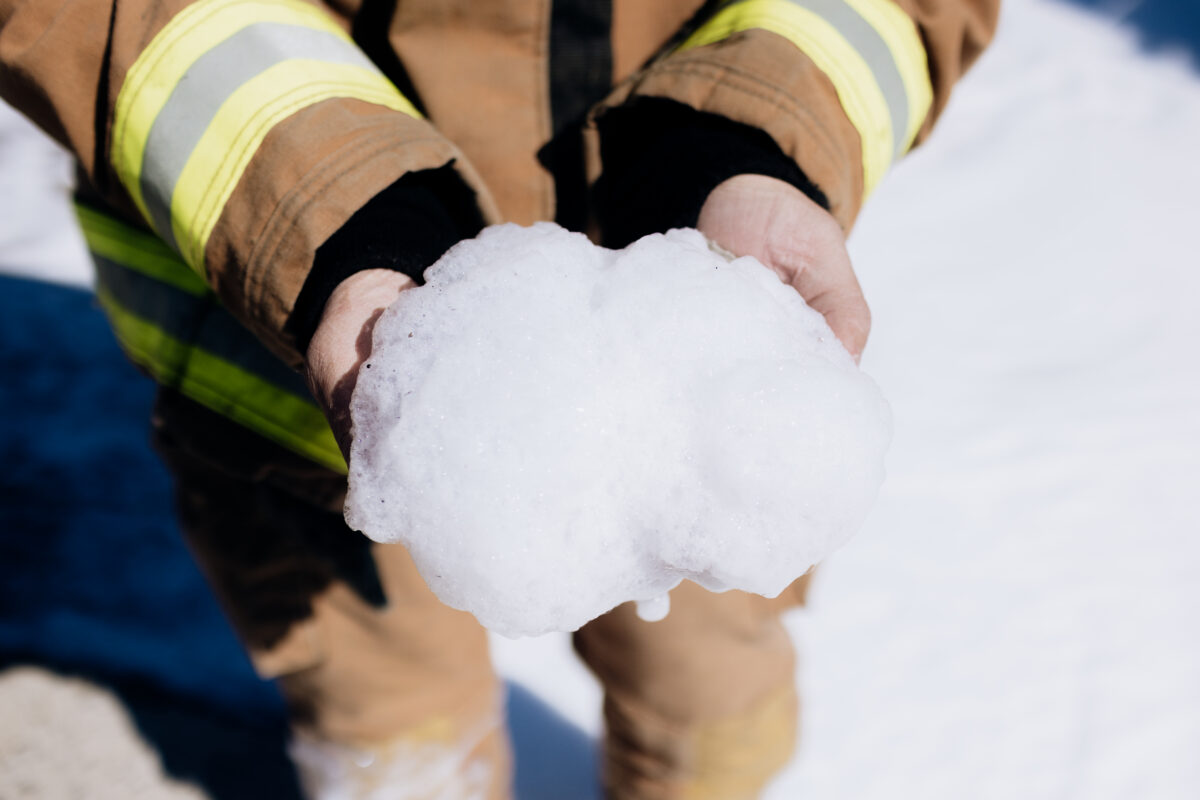
Soy-based tires were already running in the Cobb County, Ga., fleet when the county became the first urban fire department in the country to adopt soy-based firefighting foam. For the United Soybean Board (USB), that sequence is the strategy.
“Once someone sees the value of soy for one application, whether lubricants, asphalt, tires, or firefighting foam, they’re much more likely to look at the next,” said Brian Pierce, USB Senior Vice President of Strategy Operations and Industrial Innovation. “It spreads once they see the true benefits.”
Building knowledge, then demand
USB’s Biobased Academy for Fleets, developed with the American Lung Association (ALA) and consulting group KCE Public Affairs Associates, certifies fleet managers in the performance, safety, and sustainability benefits of soy-based lubricants, hydraulic fluids, tires, and other soy-based products. A companion Biobased Academy for Properties and Facilities covers building applications and building property such as parking lots, grounds, and turf. Both are promoted through the National Association of Fleet Administrators, with the ALA awarding continuing education credits.
To date, 222 people have been certified across municipal fleets and government organizations, including staff from Cobb County, the Port Authority of New York, Orange County, Florida, Maryland, Minnesota, and Chicago. Atlanta, New York, and Chicago were among the first.
The program launched around 2022, growing from a USB-KCE-ALA partnership rooted in ALA’s existing ties to sustainability-focused city programs. Its credentialing adds legitimacy that opens doors in fleet offices otherwise slow to consider new products.
Performance and safety
So, why soy-based lubricants and hydraulic fluids versus petroleum?
“Sustainability, biodegradability, and performance,” says Pierce. “Hydraulic fluids and lubricants are commonly spilled or leaked from equipment, so a biobased option that isn’t harmful to the environment is a key driver.”
Seeing Soy Checkoff dollars put to work in city fleets makes the investment tangible for USB director and farmer Barry Alexander. “You’re not just talking stats and numbers,” he said. “You’re seeing it used in these cities every day.”
The applications go well beyond snowplows and fire trucks. USB worked with Fuchs Lubricants to develop a flame-resistant hydraulic fluid from high oleic soybean oil for high-risk environments like underground mining. The Grand Canyon Railway & Hotel, operated by Xanterra Travel Collection, made the same calculation on a different scale: its crews maintain equipment across 64 miles of track using a soy-based hydraulic fluid from Renewable Lubricants, Inc., a choice that limits the environmental impact of leaks without sacrificing the performance the railway depends on.
Proof points like these are what move a soy-based product from interesting to procurable, but the path from one to the other is rarely quick. Adoption doesn’t happen overnight for fleet managers. Two obstacles slow things down: the activation energy of a first purchase, a willingness to try something new, and the procurement process itself.
Government organizations can only buy products on a certified list, and getting added requires documentation, an internal advocate, and data proving the product is safe and effective. “It’s a long game,” Pierce said. “They can’t just use any asphalt or hydraulic fluid. The cost implications of picking a bad product are huge.”
Farmers work to be sustainable on the farm, Alexander says, and extending those products into automobiles, transit systems, and other everyday equipment carries that work forward. Unlike petroleum, soybeans renew every year. “We’re not having to pull something out of the ground that takes tens of thousands of years to make.”
The industrial demand from fleets and facilities offer farmers a recurring domestic market less exposed to policy shifts or consumer trends. “If we can produce it here domestically and consume it domestically,” said Alexander, “every dollar we capture here is another dollar back in the farmer’s pocket.”
How did you like this article?
