
From the field to the world: How your checkoff dollars open doors for U.S. soy
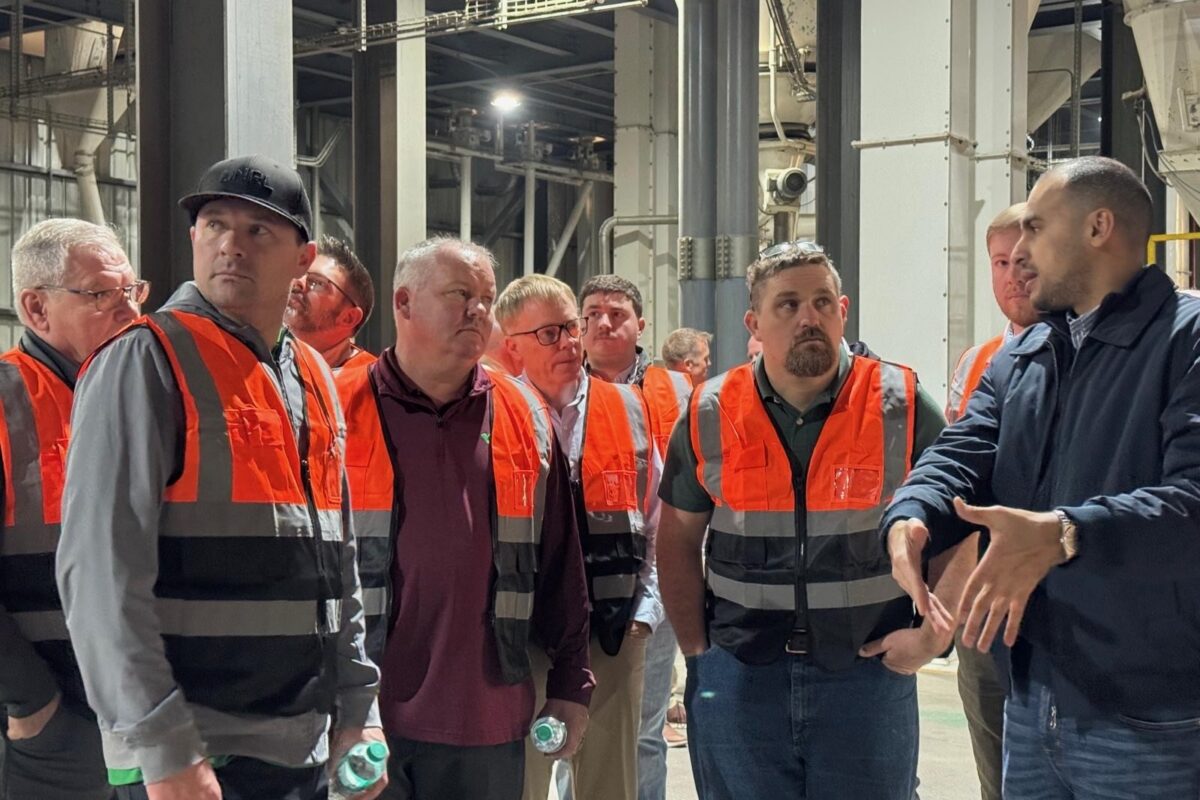
Plant Manager Mohamed Kashaf (right) leads a tour of Sadat Feed Mill in Dakahlia, Egypt, with USB Vice Chair Matt Gast on the far left.
Standing inside a large crush facility in Cairo, Egypt, North Dakota farmer Matt Gast asked a soybean buyer a simple question: Did he wish more of his soybeans came from the United States?
The answer was immediate.
“I wish it was 100%,” the buyer said. “Your quality is top notch. We don’t want anything else. When we get beans from other origins, that’s when we run into quality issues.”
Gast, who’s vice chair of the United Soybean Board (USB), was in Egypt as part of USB’s February 2026 “See for Yourself” trade mission, which cultivates the next generation of checkoff leaders. What Matt found was a relationship that U.S. soybean farmers have been building for decades.
A market decades in the making
Egypt sits at the crossroads of Africa, the Middle East and Europe. With more than 111 million people, it is the largest consumer market in the Arab world. It imports 3.5 to 4 million metric tons of U.S. soybeans annually, serving as the fourth largest market for U.S. soy, to fuel its booming poultry, aquaculture, and dairy sectors. ¹
“There was a time, back in the day, when Americans went to Egypt when they were going through tough times, and they haven’t forgotten that,” Gast said. “They loved having us there for a trade mission. I think that goes a long way.”
Another thing that goes a long way – a quality soybean.
When international buyers explain why they prefer U.S. soy, quality is always present in the conversation. U.S. soybeans naturally dry down in the field, a stark contrast to the artificial drying processes used in competing origins like South America. Buyers notice the difference, and the Soy Checkoff works to protect and promote that advantage in every market it enters.
Sustainability is increasingly part of purchasing decisions, too. Gast believes U.S. farmers are better positioned than they may realize. “We’re already the most sustainable soy producers in the world,” he said. “We’ve got to keep telling that story. The world is always looking to us to set the bar even higher.”
What beans in Cairo have to do with North Dakota
“North Dakota beans ship to export customers through the Pacific Northwest, and those same types of relationships, connections, and messaging are happening in the regions where those beans end up – it’s a collective effort,” said Gast. “We want to move the pile, tell the story, and spread the message about what we’re doing around sustainability and quality. And I think it gives farmers a great look at what their checkoff dollars are actually doing.”
That collective effort extends well beyond any single market. “We need to rely on the whole world to send our beans to,” he said. “Because the more places we can touch with our beans, the better price improvement and the more return on investment farmers are going to get.”
Soy Checkoff investments support demand growth across 90+ global markets and diversification to countries like Egypt and other parts of the world have increased U.S. soy exports by 12% year-over-year. ²
Knowing where your Soy Checkoff dollars go
Gast admits that before he was nominated for his state board, he had no idea what the Soy Checkoff did — and he had been farming for years. “I had to research it myself,” he said. “It’s eye-opening for farmers who aren’t aware of the checkoff’s impact, and after serving now on the board, it’s clear our dollars are being invested in us.”
Empowering the next generation of Soy Checkoff leaders is a priority for Gast, and his advice to farmers who are curious but unsure where to begin is straightforward.
“Start at your state level,” he said. “Get involved on a small scale.”
State involvement builds a foundation that makes national leadership a natural next step rather than a leap.
Times are tough on the farm right now, and Gast knows that taking on a volunteer role is not easy. But every relationship built in a market like Egypt, every buyer convinced that U.S. soy is worth a premium, every new use discovered for the crop – all of it flows back to the farm gate.
That work has been underway for 35 years strong. The Soy Checkoff is focused every day on delivering ROI for the nearly half-million U.S. soybean farmers.
¹ ²Source: https://unitedsoybean.org/hopper/u-s-soy-exports-continued-to-grow-in-marketing-year-2024-25/
How did you like this article?
